
GLP-1 Medication, Significant Weight Loss and Hair Loss: What Is the Connection?

I know firsthand just how positive the impact of Wegovy can be. For me, it has made a genuine difference to my health, my confidence and my weight, and I am incredibly grateful for the benefits I have experienced.
What I was not prepared for, however, was the effect it would have on my hair.
Experiencing hair loss while taking the medication gave me a very different perspective — not only as a trichologist, but as someone going through it personally. And while hair can recover, getting it back to where it was before is not necessarily a quick or easy process. It can take time, consistency and a great deal of patience.
That personal experience is one of the reasons I wanted to write this blog — to help explain why hair loss can occur during significant weight loss, what may be happening within the hair-growth cycle, and what you can do to support your hair along the way.
Losing weight can bring meaningful improvements to health, confidence and quality of life. However, some people notice an unexpected change during or after their weight-loss journey: increased hair shedding.
The shedding can feel frightening, particularly when weight loss has otherwise been a positive achievement. The reassuring news is that this type of hair loss is often temporary. However, it is still important to assess the pattern properly because rapid weight loss can sometimes reveal an underlying hair-loss condition that was already developing.
At Hair Again Clinic in Auckland, we assess the hair and scalp, review the weight-loss timeline and explore possible nutritional, medical and genetic factors before recommending treatment.
Can GLP-1 Medication Cause Hair Loss?
Hair loss has been reported by some people taking GLP-1 and related weight-loss medications, including semaglutide and tirzepatide.
The New Zealand Wegovy data sheet reports hair loss in 2.5% of people treated with semaglutide compared with 1% receiving a placebo. Hair loss was reported more frequently among people who lost at least 20% of their body weight.
Hair loss is also listed as a possible side effect in the New Zealand consumer information for Mounjaro.
However, this does not necessarily mean that the medication directly damages the hair follicles.
Researchers are still investigating the relationship. In many cases, rapid weight loss, reduced food intake, appetite suppression, nutritional changes and the physical stress placed on the body may all contribute.
Why Can Significant Weight Loss Affect the Hair?
Hair is not essential for survival. When the body experiences significant physical change or receives less energy and nutrition than it requires, resources may be redirected away from hair production.
A larger-than-usual number of follicles can then leave the active growing stage and enter the resting stage of the hair cycle.
This process is known as telogen effluvium.The affected hairs do not usually fall immediately. Shedding commonly begins approximately two to four months after the original trigger, which is why people may not initially connect it with their weight loss.
Possible contributing factors include:
Rapid or substantial weight loss
Significant calorie restriction
Reduced appetite
Inadequate protein intake
Low iron or ferritin
Vitamin B12 or folate deficiency
Low vitamin D
Low zinc
Illness, surgery or emotional stress
Hormonal changes
Dehydration or persistent gastrointestinal symptoms
An underlying genetic tendency towards pattern hair loss
More than one factor may be involved.
What Does Weight-Loss-Related Shedding Look Like?
Telogen effluvium usually causes diffuse shedding rather than one isolated bald patch.
You may notice:
More hair in the shower
Increased hair on your brush, clothing or pillow
Hair coming away when you run your fingers through it
A smaller or thinner ponytail
Reduced volume across the scalp
Increased visibility of the part
Shorter new hairs appearing during recovery
The shedding is often distributed across the scalp. It may be more visible through areas that already had lower density before weight loss began.
Smooth round patches, redness, burning, tenderness, significant scaling or smooth shiny areas are not typical of straightforward telogen effluvium and should be medically assessed.
Can Rapid Weight Loss Reveal Pattern Hair Loss?
Yes. Significant shedding can uncover male or female pattern hair loss that was previously less noticeable. Before the shedding began, the person may already have had follicle miniaturisation through the crown, hairline or upper scalp. When telogen effluvium temporarily reduces overall density, the underlying pattern can become much more visible.
This is one reason why a professional assessment is valuable. The treatment approach for temporary shedding may be different from the approach required when telogen effluvium and progressive pattern hair loss are occurring together.
Will the Hair Grow Back?
Telogen effluvium is often temporary when the original trigger has stabilised and the follicles remain healthy. Shedding may continue for several months before gradually reducing. New growth then needs time to become long enough and thick enough to improve visible density.
A general recovery timeline may include:
Shedding beginning two to four months after the trigger
Increased shedding continuing for several months
Early regrowth appearing once the hair cycle begins to recover
Gradual improvement in volume over six to twelve months
Recovery times vary. Ongoing weight loss, inadequate nutrition, illness, stress or underlying pattern hair loss may prolong the process.
Should I Stop My GLP-1 Medication?
Do not stop or change a prescribed GLP-1 medication without speaking with your prescribing doctor.
The medication may be providing important benefits for weight management, diabetes or cardiovascular health. Your prescriber is the appropriate person to review your dose, rate of weight loss, side effects and overall treatment plan.
Hair Again does not manage or alter GLP-1 medication. Our role is to assess the hair and scalp, explore possible contributing factors and recommend appropriate hair-support options. We may suggest that you discuss particular concerns with your own GP, prescribing doctor or dietitian.

The Importance of Nutritional Support
Adequate nutrition is central to supporting hair recovery during and after significant weight loss.
Eating less food means there is less opportunity to obtain the protein, vitamins and minerals needed for normal hair production. Nausea, vomiting, diarrhoea, food aversions and reduced appetite may make this more difficult.
Protein
Hair is primarily made from keratin, a protein. Consistently low protein intake may contribute to shedding and slower recovery.
Depending on dietary preference, protein sources may include:
Eggs
Fish
Lean meat or poultry
Greek yoghurt or cottage cheese
Tofu and tempeh
Beans, chickpeas and lentils
Nuts and seeds
Suitable protein supplements where recommended
Protein requirements vary according to body size, health, activity and the rate of weight loss. A registered dietitian can provide personalised advice.
Iron and Ferritin
Low iron stores can contribute to increased shedding, particularly in women. Ferritin helps indicate the body’s stored iron.
Iron supplements should not be taken simply because hair is shedding. Excessive iron can be harmful, so testing and professional advice are important.
Vitamin B12 and Folate
Reduced food intake, restrictive diets and some medical conditions may affect vitamin B12 or folate levels. Both nutrients are involved in healthy cell production.
Vitamin D and Zinc
Low vitamin D or zinc may contribute to poor hair quality or shedding in some individuals. Supplementation should be based on individual need rather than assuming that a high dose will produce faster hair growth.
Blood Tests to Discuss With Your GP
Depending on your health and symptoms, you may wish to discuss blood testing with your GP.
Possible investigations may include:
Full blood count
Ferritin and iron studies
Vitamin B12
Folate
Vitamin D
Thyroid function
Zinc where appropriate
Liver and kidney function where clinically indicated
Electrolytes
Other tests based on your medical history
Hair Again does not diagnose medical or nutritional conditions. Blood-test interpretation and treatment of deficiencies should be managed by your GP or another appropriately qualified healthcare professional.
Hair Again’s Assessment Process
Before recommending treatment, we look at the complete picture.
Your consultation may include:
Your GLP-1 or weight-loss medication history
When treatment began and whether the dose changed
The amount and speed of weight loss
When increased shedding started
Appetite and dietary changes
Recent illness, surgery or stress
Current medication and supplements
Family history of pattern hair loss
Visual scalp and hair assessment
Trichoscope imaging
Assessment of density and follicle miniaturisation
Progress photographs
This helps us determine whether the presentation appears consistent with temporary shedding, underlying pattern hair loss or a combination of both.
A Personalised Treatment Plan
There is no single treatment plan for everyone experiencing hair loss after weight loss.
The first priorities are generally identifying possible contributing factors, supporting adequate nutrition and allowing the body time to stabilise. Additional hair treatments may then be considered according to the condition of the follicles and the severity of the shedding.
Nutritional and Home Support
A supportive plan may include:
Reviewing protein and overall calorie intake
Referral back to your GP or prescriber
Consultation with a registered dietitian
Correcting confirmed nutritional deficiencies
A suitable hair-support supplement where appropriate
Gentle scalp and hair care
Reducing excessive heat or chemical processing
Avoiding tight hairstyles and unnecessary tension
Supportive topical scalp products
Follow-up photographs and trichoscope assessment
Supplements cannot compensate for inadequate food intake or an untreated medical deficiency. They should form part of a considered plan rather than being used as the only response to significant shedding.
PRP, PRF and Growth Factor Concentrate
Regenerative treatments may be considered to support active follicles during recovery, particularly when shedding is severe or an underlying pattern of follicle miniaturisation is also present.
Platelet-Rich Plasma
PRP uses a concentrated portion of the client’s own blood plasma and platelets. The platelet-rich plasma is carefully administered into areas requiring support.
PRP may help support the follicle environment and encourage stronger growth from follicles that remain active.
Platelet-Rich Fibrin
PRF is prepared differently and creates a natural fibrin matrix that supports a more gradual release of platelets and associated growth factors.
PRF may be considered when active shedding is a significant concern.
Growth Factor Concentrate
GFC is a refined platelet treatment that isolates and concentrates selected growth factors from the client’s own blood.
These treatments are usually recommended as a course rather than a single appointment. Individual results vary, and no treatment can guarantee a particular amount of regrowth.
Activa Hair™ and Advanced Scalp Support
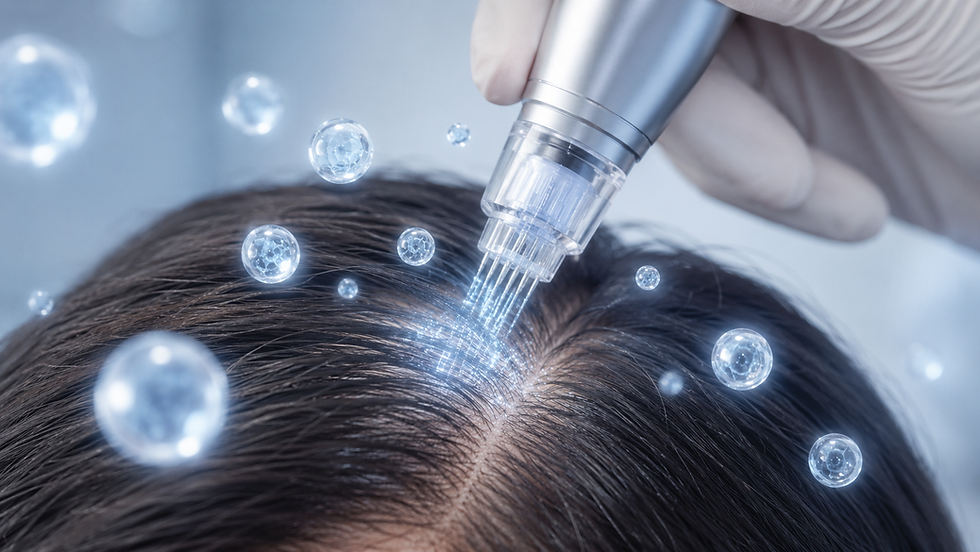
Activa Hair may be considered as a supportive in-clinic treatment for weakened follicles and reduced scalp density.
The treatment is applied through controlled scalp micro-needling to deliver a specialised regenerative serum into the treatment area.
It may form part of a plan for clients wanting follicle and scalp support without using their own blood.
Regenera Activa®
Regenera Activa is usually more relevant when significant weight-loss shedding has uncovered underlying male or female pattern hair loss.
It is an autologous micrograft treatment prepared from small samples of the client’s own healthy scalp tissue. It is typically performed as a one-off procedure.
Regenera Activa would not ordinarily be the first recommendation for uncomplicated temporary shedding. Its suitability depends on whether trichoscope assessment shows progressive follicle miniaturisation and whether enough active follicles remain in the affected area.
Exosome Treatment
Exosome-based treatments are a newer regenerative option that may be considered for scalp and follicle support.
Early research is encouraging, but exosome treatment for hair loss remains an emerging field. Products, sources and treatment protocols vary, and more high-quality research is required.
During your consultation, we will explain the product being considered, the proposed treatment process and the limitations of the current evidence.
Could Compounded Medication Help?
Prescription hair-loss medication may be considered when shedding is prolonged, recovery is slow or assessment identifies underlying pattern hair loss.
Medication is not automatically required for temporary telogen effluvium.
Possible options may include topical or low-dose oral minoxidil. Depending on the client’s sex, medical history and pattern of hair loss, the prescribing doctor may consider other ingredients in a personalised compounded preparation.
For women accessing the Hair Again programme, finasteride and dutasteride are not offered. Where appropriate, a doctor may instead consider minoxidil or a personalised minoxidil and spironolactone compound.
For men with confirmed pattern hair loss, a doctor may consider minoxidil and a DHT-targeting option where clinically appropriate.
Spironolactone, oral minoxidil, finasteride and dutasteride are not suitable for everyone. The final decision always belongs to the prescribing doctor.
When Should You Seek Help?
Consider arranging an assessment if:
Shedding is severe or continuing to increase
You can see a noticeable reduction in density
The part or crown is becoming progressively wider
Shedding has continued for more than several months
There are patches of complete hair loss
Your scalp is red, painful, burning, itchy or inflamed
You are unsure whether the hair loss is temporary
You had thinning before your weight-loss journey began
You would like to understand whether treatment may support recovery
Sudden patchy loss, scalp inflammation or symptoms of illness should also be discussed with your GP or dermatologist.
Supporting Your Hair Without Undermining Your Weight-Loss Journey
Experiencing hair shedding does not mean that your weight-loss journey has failed or that you must immediately stop your medication.
It may be a sign that your body has experienced rapid change or that your current nutritional intake needs additional attention.
At Hair Again Clinic, we assess what appears to be happening, explain your options honestly and create a plan based on your follicles, health information and individual goals.
For some clients, reassurance, nutritional support and monitoring may be enough. Others may benefit from regenerative treatments, compounded medication or a combination of approaches.
The right starting point is a clear assessment.
Book a Hair and Scalp Consultation
Hair Again Clinic761B Beach Road, Browns BayAuckland, New ZealandPhone: 021 223 7522Email: info@hairagain.nz
Important Information
This article is intended for general education and does not constitute medical advice, diagnosis or a guarantee of treatment results.
Do not stop or alter prescribed GLP-1 or weight-loss medication without consulting your prescribing healthcare professional.
Hair Again Clinic is a specialist hair-restoration and trichology clinic and is not a medical practice. Medical conditions, nutritional deficiencies and prescription decisions require assessment by an appropriately qualified healthcare professional.
Individual suitability and treatment results vary.


Comments